
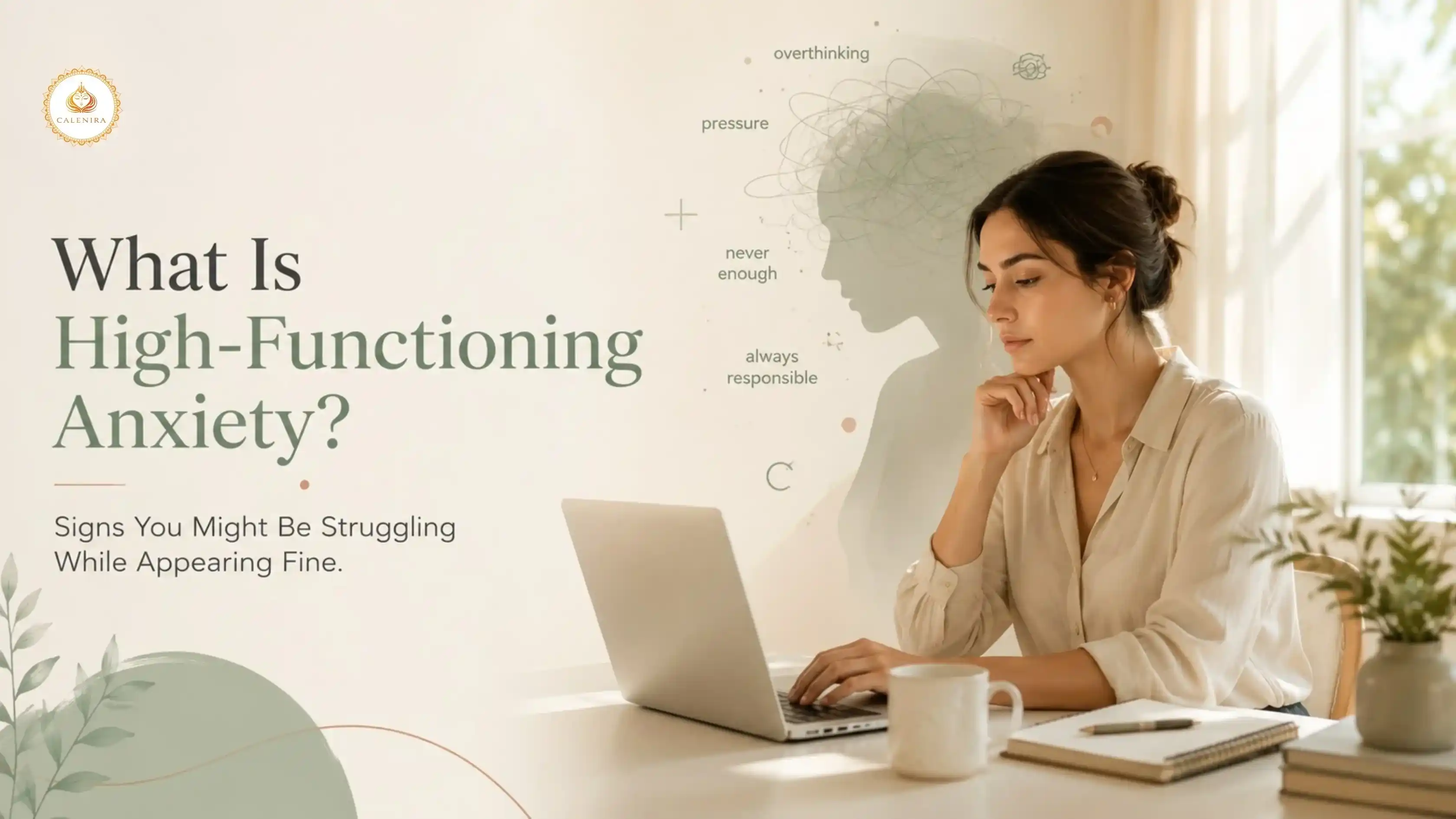
Every time you are on time, every time you meet your deadlines. Every time you smile at co-workers, respond to each email, and somehow always manage to have it together, at least on the outside. But inside there’s a constant hum of worry that doesn’t go away.
Here's what high-functioning anxiety is and how it feels. If this sounds familiar to you, you’re not the only one.
What Is High-Functioning Anxiety?
High-functioning anxiety isn’t a clinical label, but it is a very real experience. While not a formal diagnosis, the term is often used for people who consistently meet their responsibilities and appear high-achieving despite ongoing anxiety. High-functioning anxiety isn’t like other anxiety disorders in which your functioning is clearly impaired. It’s hidden behind overachievement, perfectionism, and a persistent drive to “do more” and never be satisfied with that.
Why It's More Common Than We Think — Especially in India
Mental health conversations in India are growing, but there remains a strong cultural pressure to appear capable, composed, and in control. Whether it’s managing family expectations, competition in a career, academic pressure, or demands of joint family dynamics, anxiety symptoms in India are often masked by hustle, duty, or simply not having language to express them.
Anxiety and burnout in the workplace have been on the rise in the past few years among young Indian professionals, but most cases go unaddressed as productivity is mistaken for wellness.
In fact, a 2022 report by the World Health Organization noted that India accounts for nearly 15% of the global mental health burden, yet awareness among people and seeking help for that remain very low.
There's also a layer that rarely gets named openly: the "log kya kahenge" fear, which means the constant awareness of how you appear to family, community, and colleagues. And that makes it much harder to admit when you’re not okay.
Signs You Might Have High-Functioning Anxiety
Recognizing the signs is the first step. Here's what high-functioning anxiety often looks like from the inside:
1. You're always "on."
Your mind rarely switches off. You replay conversations, plan obsessively, and lie awake running through tomorrow's to-do list. To you, rest feels uncomfortable, almost like a threat.
2. Overthinking is your default
Every decision, no matter how small, turns into an exhausting mental exercise. You analyse, second-guess, and seek reassurance even when things are objectively fine.
3. You avoid things by over-preparing
Instead of avoidance through withdrawal (like classic anxiety), you avoid discomfort by over-preparing, over-researching, and over-delivering. However, the output looks impressive, but the internal cost almost becomes invisible to others.
4. People-Pleasing and Trouble saying No
In India, anxiety symptoms often manifest as an obsessive need to keep everyone happy by saying yes when you mean no, shrinking yourself in conflict and feeling responsible for other people’s emotions. This is especially common in women who are often socialised to put others’ comfort before their own. What looks like kindness or care from the outside is often quiet and exhausting.
5. Irritability and short fuse
When you are carrying a constant mental load, even small frustrations can feel overwhelming. Signs of high-functioning anxiety are often labeled as “bad attitude” or “mood swings” instead of being identified as anxiety and burnout.
The High Achiever Trap
Here's the cruel irony of high-functioning anxiety: the very coping mechanisms that help you succeed, perfectionism, hyper-preparedness, and working harder, also feed the anxiety. You feel anxious, so you achieve more. Achieving more raises the bar. The bar being higher makes you more anxious.
This cycle is at the heart of overachiever anxiety, and it's why workplace anxiety and burnout so often follow high-functioning individuals into their 30s and beyond, long after they've "made it" by every external measure.
Over time, this pattern leads to burnout and anxiety, emotional numbness, relationship strain, and a deep sense of emptiness beneath the productivity.
What Can You Do About It?
High-functioning anxiety is very responsive to support, but you need to be willing to name it first.”
The good news is that high functionality anxiety responds well to treatment. There is good evidence for Cognitive Behavioural Therapy (CBT) and mindfulness based approaches for anxiety. For example, CBT helps you catch the thought spiral before it turns into a 2am planning session, teaching you to question the thought, not just manage it. If in person is not available, online therapy in India has come a long way in the last few years.
Self awareness is one thing, knowing when to ask for help is another. If you've been seeing these same patterns for months, and reading articles like this one then it isn't enough to change anything. Therefore, if your anxiety is interfering with your sleep, your relationships, or your feelings, it's time to reach out to someone who has expertise.
Slow down intentionally. Not as a reward for finishing everything, but as a practice. Your nervous system needs signals of safety, not just success. Even small practices such as a ten-minute walk without your phone, a meal eaten without a screen can begin to shift your nervous system out of chronic stress mode.
Talk about it. Whether with a trusted friend, a partner, or a professional support space like Calenira, you can break the silence of your suffering.
Set boundaries. Learn the difference between what you want to do and what you do out of fear. That gap is where your anxiety lives and flourishes.
You've been holding it together for everyone else. It's time to show up for yourself.
👉 Book consultation with Calenira today