
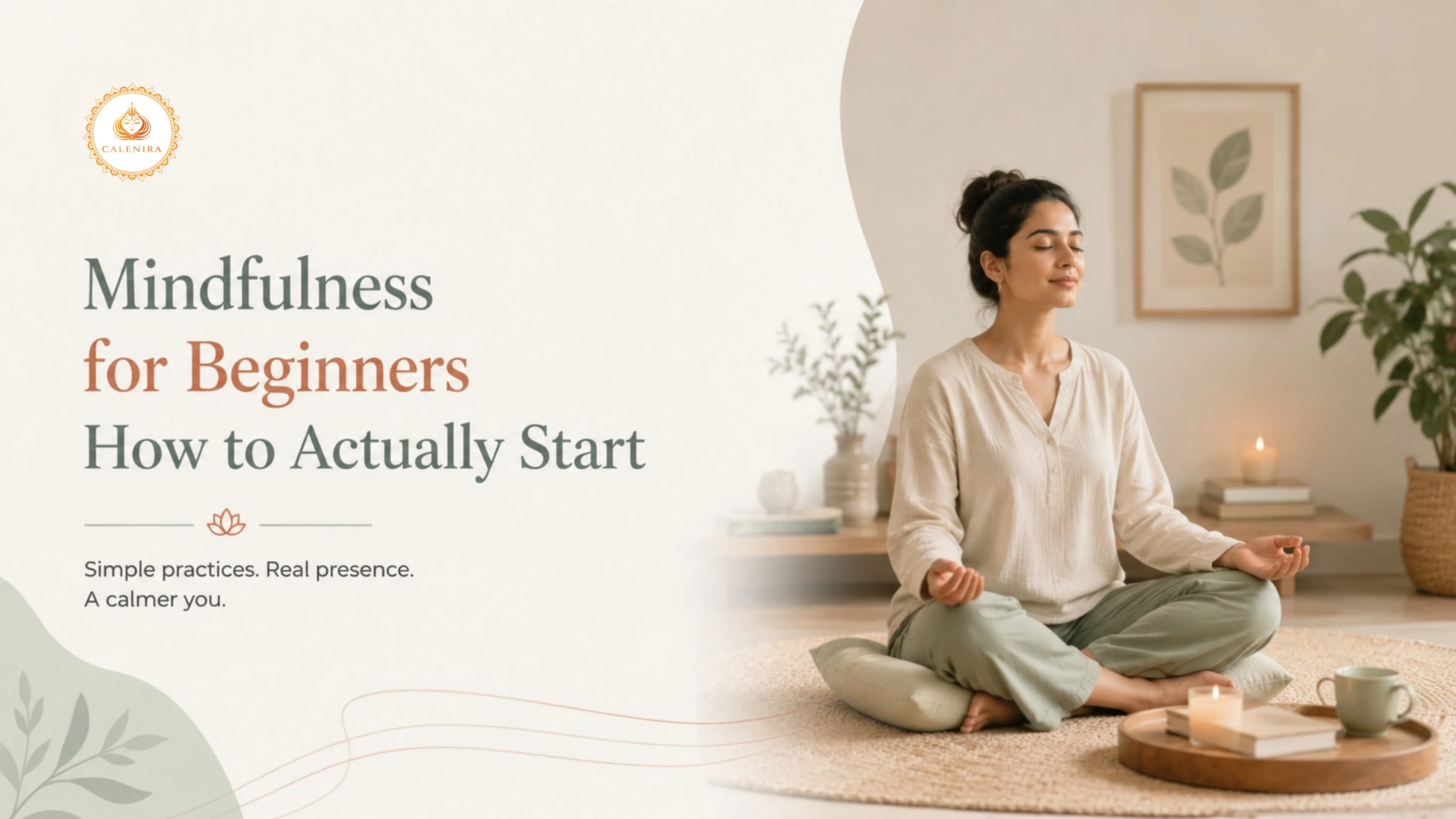
Bring up meditation and you already know the picture that comes to mind — someone sitting cross-legged, eyes closed, incense curling away somewhere in the background.
That image alone is enough to make people talk themselves out of trying before they've even started. And with mindfulness India has grown so curious about lately, a lot of beginners assume they need some special setup, a quiet retreat, or the right equipment before they can do it "properly."
They don't. You can build a real mindfulness habit without an app, without a cushion, and without turning your entire schedule inside out to make room for it.
This is for anyone who wants the actual benefits of mindfulness — a calmer mind, less reactive stress, a bit more focus during the day — without the whole production that usually comes attached to it.
Why So Many Beginners Give Up Early
Most people don't quit mindfulness because it doesn't work. They quit because of how it's taught. Apps love a daily streak, and before long that streak starts feeling like one more chore competing for space on your to-do list, not something meant to calm you down.
Then there's the advice itself — "just observe your thoughts," people say, as if that's supposed to mean something the first time you actually try it, when really nobody tells you what that's meant to look or feel like in real life.
And there's this unspoken assumption that you need a solid twenty minutes of silence every single day, which, for most people juggling work, family, and everything else, simply isn't realistic.
None of that is a hard rule, though. It's just one version of mindfulness that got popularised — and it's honestly not the most practical one for a beginner.
What Mindfulness Actually Means, Without the Jargon
Cut through all the wellness-industry language, and mindfulness comes down to something pretty simple: actually paying attention to what you're doing while you're doing it, instead of coasting through it on autopilot the way most of us do, most of the day, without even realizing it.
That's really the whole idea. When you eat lunch while scrolling through your phone and barely register what you're tasting, that's the opposite of being mindful.
When you actually notice the flavour, the texture, whether you're genuinely hungry or just eating out of habit — that's mindfulness happening naturally, with no app or cushion anywhere in sight.

How to Start, Using Things You Already Do
The easiest way into this practice is to stop thinking of it as something new you need to add to your day. Instead, look at what you're already doing and simply do it with more attention.
Slow Down One Ordinary Task
Pick something small and ordinary — brushing your teeth, washing the dishes, making your morning tea, anything that's already part of your day.
For the next few days, just try slowing that one thing down and actually being there for it. Feel the warmth of the water on your hands, listen to the sound the brush makes, notice the smell as the tea steeps.
At some point your mind is going to wander off — it just will, that's what minds do — and that's completely fine. Notice it happened, and gently bring yourself back, no judgment attached.
It's a tiny habit, almost too small to matter, but it quietly teaches your brain what being present actually feels like. And the best part is you never even have to sit still to do it.
Let Walking Be Your Practice
Honestly, you don't even need a cushion when you've already got two working legs and a hallway or a set of stairs. Next time you're walking somewhere — to your car, around the block, up to your apartment — just try paying attention to the actual movement instead of scrolling on your phone.
Notice your feet meeting the ground with each step, notice your breathing, let yourself actually take in what's around you. Suddenly this thing you'd normally rush through without a second thought turns into a quiet little reset, tucked right into the middle of an ordinary day.
Try the Three Breaths Reset
Forget committing to some long meditation session — try something much smaller instead. Right before you start a new task, take three slow breaths, in through your nose and out through your mouth.
That's it. It barely takes fifteen seconds, but it's often just enough to snap you out of autopilot and back into the present. Try it right before a meeting, before you reply to that one message that's got you a little on edge, or first thing when you open your laptop in the morning.
Name What You're Actually Feeling
When stress, frustration, or anxiety shows up, try just quietly naming it in your head — "this is frustration," or "this is worry."
Sounds almost too simple to actually do anything, right? But naming the emotion instead of getting swept up in it creates this small gap between you and the feeling.
And that gap, small as it is, is really where mindfulness lives.
Eat One Meal Without a Screen
Choose one meal a day — breakfast, lunch, whatever works with your schedule — and eat it without your phone, television, or laptop nearby. Just you and the food in front of you.
It sounds almost too basic to bring up, but most beginners are genuinely surprised by how much they notice once the screen disappears from the table.
Turning This Into a Habit Without Burning Out
The real trick here isn't willpower — it's attaching these small practices to things you're already doing on autopilot anyway.
Tie your three breaths to the moment you sit down at your desk each morning, or do the slow task around the same time every evening, and pretty soon it stops feeling like effort. It just becomes part of how your day naturally goes.
The goal was never a blank, thought-free mind. It's simply getting a little better at noticing when your attention has wandered off and gently bringing it back. That noticing, over and over again, is the actual practice.